Company owned "sustainability labels"
Not every green logo is an independent label. Many products carry symbols that promise sustainability. Some are independent sustainability labels. Others have been developed by companies themselves.

What is the difference between independent labels and company owned logos?
There are sustainability labels that are awarded and monitored by independent bodies. In principle, these are open to all companies or products that meet the relevant requirements. On the Siegelklarheit Portal, we can assess such labels in detail in terms of their credibility as well as their environmental and social criteria.
Alongside these, there are labels like signs or private label brands/marks that a company creates itself and awards to itself or its products. These marks can make very different sustainability claims. The examples below show when they can still be meaningful and when a degree of scepticism is appropriate.
What does it mean when company owned signs appear together with independent labels?
If a company owned mark/logo appears alongside an independently verified sustainability label, it is as meaningful as the label used - provided both make the same claim. In this case, the company owned logo can even increase visibility for consumers. For example, many food retailers and discounters have developed their own organic logo, but it must always be used together with the EU organic label.
It becomes more difficult when a company owned logo appears alongside an independent label on some products, but not on others. As a consumer, the absence of independent certification often goes unnoticed. This is sometimes the case with natural cosmetics lines from large drugstore chains: many products also carry an independent natural cosmetics label, but some do not because their ingredients do not meet the relevant requirements. In those cases, only the company owned sign is shown. Anyone who values certified natural cosmetics should therefore take a closer look at private logos and watch out for independent labels.
Which company owned sustainability logos exist - and what do they really mean?
Many companies use self created signs that look like sustainability labels but are not backed up by an independent label. For consumers, it is then difficult or even impossible to verify the claims made. In the best case, the company discloses the requirements behind its own logo - but independent monitoring is usually lacking.
We have found company owned logos relating to the following sustainability topics:
Microplastics (for example in shower gel):
- A “microplastic free” logo may mean that no solid microplastic particles have been added - but liquid or gel like plastics may still be present.
- It is worth looking for further information and checking what the manufacturer means by “microplastics”.
Coral friendly (for example in sunscreen):
- A logo stating “reef friendly” or “coral friendly” suggests that the entire product is biodegradable and harmless to marine life. In the small print, however, it often says “in accordance with the Hawaiian reef law” - which only bans two chemical UV filter substances that may harm corals. All other ingredients do not have to be harmless to aquatic organisms or easily biodegradable in the sea.
- The island state of Palau has much stricter rules that ban many more cosmetic ingredients, but these are rarely referenced by manufacturers.
Recyclable (for example on packaging):
- “Recyclable” does not necessarily mean that the material is actually recycled. Many bio based plastics are technically recyclable, but there are no suitable recycling facilities. In the worst case, they can even disrupt the recycling processes of widely used plastics such as polyethylene (PE) or polypropylene (PP).
Recycled content (for example on plastic bottles or in clothing):
- With a logo such as “50 percent recycled plastic”, it is often unclear whether this refers to production waste or to genuinely used and recycled plastic packaging (post consumer recyclate). Consumers generally cannot verify this information or determine the exact recycled content.
- When plastic drinks bottles are turned into clothing, the logo “made from X percent recycled material” is technically correct - but the plastic is then no longer available for food contact. And clothing is currently rarely recycled into new clothing.
“Free from XY” (for example on products intended for food contact):
- “BPA free” is widespread on drinking bottles, baby bottles or blender jugs - sometimes even presented as a logo. However, this does not mean the product is low in harmful substances overall, nor that it contains no other harmful bisphenols. The same applies to logos such as “phthalate free”, “free from PFOA/PFOS”, or “paraben free”.
- More helpful would be a full declaration of all materials and chemicals used - or at least a label from an accredited auditing body confirming low levels of harmful substances.
- With a logo such as “plastic free”, it is often also unclear whether this refers only to the packaging or also to the contents - and whether it applies to the entire product or just parts of it.
Tested (for example “dermatologically tested” or “tested for harmful substances”):
- Such claims are of limited value without further details. Information is missing about which institute tested what, using which method.
- The test result is also not disclosed.
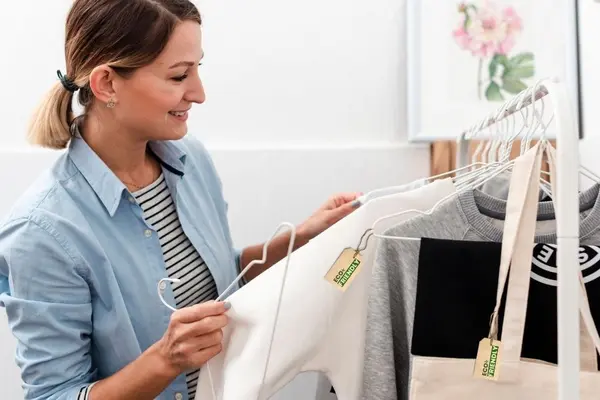
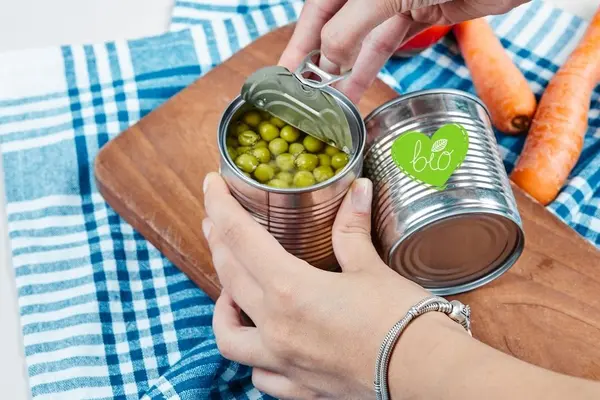
“Bio”, “Eco”, or “Organic” on non food products:
- The EU organic regulation generally applies only to food and certain agricultural products - not to non food items such as candles, paints, cosmetics or detergents.
- For these products, the terms “Bio”, “Eco”, or “Organic” are neither uniformly defined nor legally protected. They can therefore be used in very different ways and do not automatically mean that the raw materials come from organic farming. Often, they refer only to individual ingredients or to the use of renewable resources.
The same legal requirements apply to all foods sold as “organic” or “eco”, regardless of the brand under which they appear on the shelf. An organic private label brand must meet at least the same legal requirements as any other organic food.
EU Directive "Empowering consumers for the green transition" (ECD)
From 27 September 2026, stricter rules will apply to sustainability labels and label-like symbols. In the long term, a sustainability label you find on a product is therefore more likely to represent a genuine, verified claim. Purely marketing-driven labels without independent verification will increasingly disappear from the market.