How Siegelklarheit evaluates labels
Here, you can find out how Siegelklarheit assesses sustainability labels and which criteria are used to evaluate them.


- Siegelklarheit assesses labels at different levels of detail.
- The detailed assessment is a comprehensive evaluation carried out by experts and independent institutions. It shows how trustworthy a label is and how well it takes account of people and the planet.
- A quick check provides a faster way to assess the trustworthiness of other labels.
- Label-like symbols and companies’ own "sustainability labels" are not assessed.
What assessments and information are available for labels?
Where possible, Siegelklarheit assesses labels in detail through a detailed assessment. If a detailed assessment is not (yet) possible, the label undergoes a quick check instead. Company-owned labels are not assessed by Siegelklarheit.
Detailed assessment: Siegelklarheit’s detailed evaluation system
For its detailed assessments, the Siegelklarheit team works with the International Trade Centre (ITC) a joint agency of the United Nations and the World Trade Organization.
Together with independent evaluators, ITC collects comprehensive data and information from standard organisations and makes these available for assessment by Siegelklarheit.
Which areas are used to assess sustainability labels?
Siegelklarheit assesses comprehensive criteria in the areas of:
- Credibility: The extent to which a label’s claims can be trusted.
- Environmental friendliness: For example, protecting biodiversity and preventing soil, air and water pollution.
- Social responsibility: For example, banning child labour and ensuring equal treatment.
There are defined criteria for each of these three areas. Siegelklarheit distinguishes between particularly important minimum criteria and extended criteria.
How does the result of the detailed assessment look like?
A label that has been assessed in detail can receive one of five assessment results, if it meets the criteria in the area of credibility and in one further area (environmental or social criteria) as set out below:
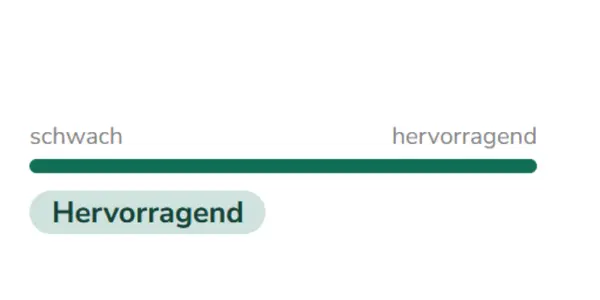

Excellent:
The label meets all minimum criteria and goes well beyond them.
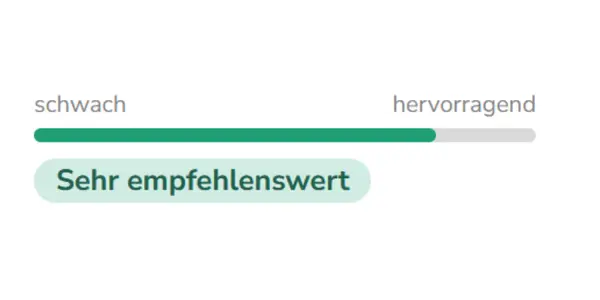

Highly recommended:
The label meets all minimum criteria and goes beyond them to some extent.
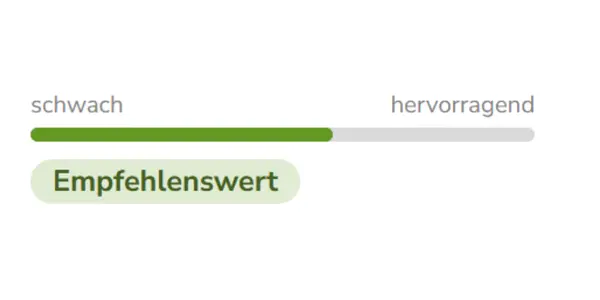

Recommended:
The label fails to meet up to three minimum criteria.
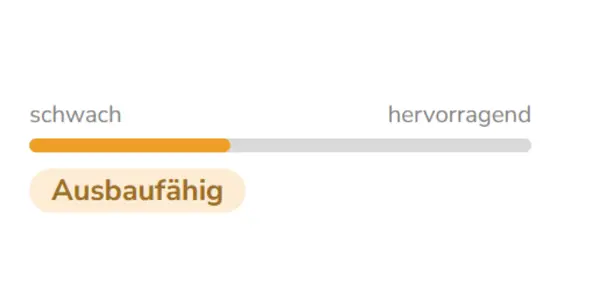

Needs improvement:
The label meets at least half of the minimum criteria.
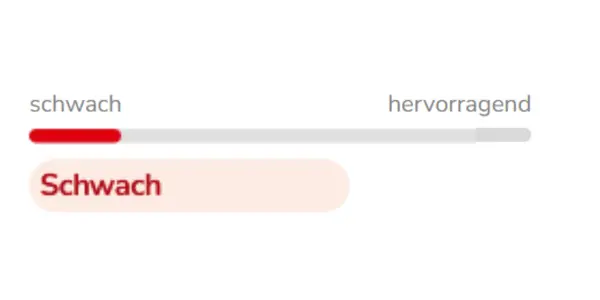

Poor:
The label meets fewer than half of the minimum criteria.


Special distinction: Diamond
What does the Diamond symbol mean? The Diamond identifies credible labels with particularly high and comprehensive sustainability requirements – in both environmental and social criteria.
This distinction is awarded only to labels that receive "Excellent" as assessment result and meet particularly demanding criteria in both areas.
All labels with a detailed assessment also meet the five criteria of the quick check, which Siegelklarheit uses to gauge a label’s basic trustworthiness. Find out more in the next section on the quick check.
All assessment results are reviewed and updated regularly.
Quick check: Siegelklarheit’s initial trust check
The quick check shows whether a sustainability label is generally trustworthy.
Its assessment criteria also draw on the requirements of the EU Directive "Empowering Consumers for the Green Transition" (ECD, 2024/825/EU), which is intended to better protect consumers against greenwashing and misleading environmental claims.
Labels that fully pass the quick check meet this initial trust check. However, this does not include a legal review of whether the labels comply with applicable regulations.
Which questions are used to evaluate sustainability labels in the quick check?
Siegelklarheit examines whether:
- documents relating to the label are publicly available and free to access,
- in principle, any interested organisation can apply for certification under the label,
- independent expert bodies check whether companies and their products meet the label’s requirements,
- there are consequences for non-compliance, for example where requirements are violated or the label is used without authorisation,
- there are clear rules for using logos, symbols or claims in connection with the label.
How does the result of the quick check look like?
Depending on how many of the five questions above can be answered with “Yes”, a label receives one of three indications of its basic trustworthiness in the quick check:
Smiling face
5/5 x "Yes"
Generally trustworthy
Neutral face
3/5 or 4/5 x "Yes"
Trustworthiness is less well evidenced.
Sad face
0/5, 1/5 or 2/5 x "Yes"
Trustworthiness is poorly evidenced.
A label with a smiling face is considered to be generally trustworthy. However, this assessment says nothing about how environmentally friendly or socially responsible a label is - this is covered in the Siegelklarheit’s detailed assessment (see above).
For a label with a neutral or sad face, its trustworthiness is less well evidenced. It is worth taking a closer look at such labels to understand what really lies behind them.
Good to know:
The quick check only provides information on a label’s basic trustworthiness – in other words, whether it is based on a sound and robust system. It does not cover the environmental or social performance of a label. These areas are examined as part of the detailed assessment (see section above).
Why are some labels not assessed?
Some labels in the label directory are not "genuine" labels. They are label-like symbols or private labels. There is often only limited information available about these labels. Companies create and use them exclusively for themselves. For this reason, company-owned symbols are not assessed on Siegelklarheit.